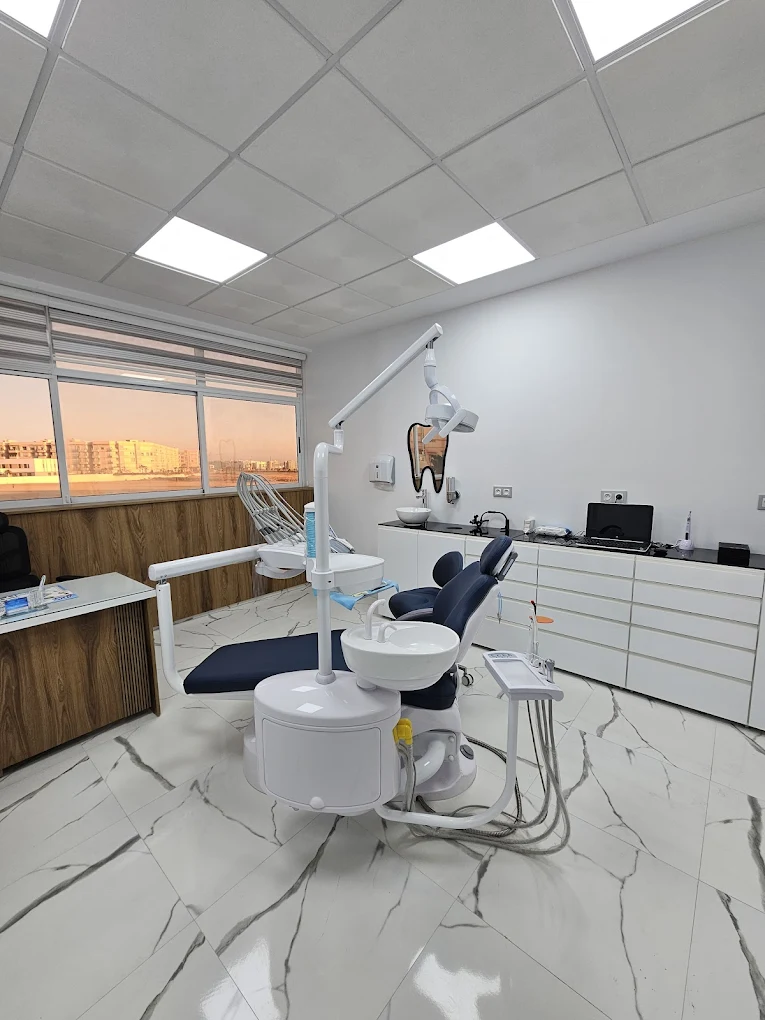
Good oral health relies on regular follow-up and treatment carried out at the right time. From scaling to wisdom tooth surgery, every step aims to preserve the teeth for as long as possible. At Dr. Hikmat's practice in Agadir, the emphasis is on accurate diagnosis, prevention and well-supervised surgical care.
According to the World Health Organization's Global Oral Health Status Report (2022), untreated caries in permanent teeth remains the most common noncommunicable disease in the world, affecting about 2 billion people. These figures remind us how important it is to see the dentist regularly, before pain even appears.
Conservative care
Conservative care refers to all the treatments designed to preserve a tooth affected by decay rather than extract it. During the consultation, the practitioner examines the teeth, takes X-rays if necessary and detects early-stage lesions that are sometimes invisible to the naked eye. The earlier a cavity is treated, the simpler, faster and more economical the treatment.
In most cases, a cavity is treated with a composite, a tooth-colored resin, in a single session. For more extensive damage, ceramic inlays and onlays protect the remaining tooth structure while respecting the natural anatomy.
- Scaling and polishing to remove plaque and tartar, to be done once or twice a year.
- Aesthetic composites to treat cavities in both front and back teeth.
- Ceramic inlays and onlays for extensive cavities.
Endodontics
When the cavity reaches the dental pulp, the central tissue that contains the nerves and blood vessels, direct treatment is no longer enough. Endodontics, better known as root canal treatment, then comes into play: the practitioner removes the infected tissue, disinfects the canals and then fills them, in order to stop the infection and save the tooth.
Contrary to popular belief, a root canal treatment under local anesthesia is most often painless. It is carried out in one or two sessions depending on the extent of the infection, with a radiographic check of the filling.
- In the event of persistent pain or reinfection of an already treated tooth, a root canal retreatment may be offered.
- After a root canal treatment, a crown is often recommended to protect the weakened tooth.
Oral surgery
Oral surgery covers extractions and minor procedures carried out in the practice under local anesthesia. A tooth that is too badly decayed, a fractured root or a poorly positioned wisdom tooth may require an extraction. This decision is made after a full clinical and radiographic examination and after weighing up all the options for saving the tooth.
Wisdom teeth, which usually appear between the ages of 17 and 25, frequently cause problems when there is not enough room: they may remain impacted, grow in the wrong direction or cause repeated infections. Their preventive removal often avoids more serious complications.
- Simple extraction of a visible tooth, quick and performed under local anesthesia.
- Surgical extraction of an impacted tooth or a fractured root.
- Removal of wisdom teeth, planned on the basis of X-rays.
Anesthesia: a key step in treatment
Local anesthesia is used for almost all dental treatments and surgical procedures. An anesthetic gel is first applied to the gum, then the practitioner injects the local anesthetic with a very fine syringe. The effect is felt within a few minutes and the area becomes numb for the whole duration of the treatment.
Before the procedure, it is important to mention your medical history, any long-term medication and allergies. This step makes it possible to adapt the protocol, particularly for people taking anticoagulants.
Recovery and healing
The quality of recovery depends as much on the advice given as on the procedure itself. After an extraction, slight bleeding and discomfort are normal during the first few hours. The practitioner prescribes painkillers if needed and, sometimes, a local antiseptic; antibiotics are only given if the infection justifies them.
- Bite on the gauze pad for 30 to 45 minutes to encourage the blood clot to form.
- Avoid vigorous mouth rinses and tobacco for the first 24 to 48 hours.
- Prefer a soft, lukewarm diet during the first few days.
- Apply a cold pack to the cheek to limit swelling.
A follow-up visit is scheduled a few days after the procedure. At Dr. Hikmat's practice in Agadir, every patient receives written recommendations and follow-up to make sure the healing is going well.
FAQ: frequently asked questions
Is root canal treatment painful?
No, root canal treatment is performed under local anesthesia and is most often painless. Any feeling of discomfort quickly disappears after the procedure. A simple painkiller may be prescribed for the first few days if needed.
How long does a wisdom tooth extraction take?
A wisdom tooth extraction takes on average 30 to 45 minutes per session, including anesthesia. The duration varies depending on the position of the tooth and how difficult it is to access.
What should I do after a tooth extraction?
Bite on the gauze pad for about thirty minutes, avoid spitting and smoking, and prefer a soft, lukewarm diet. Any pain is relieved by the prescribed painkillers.
Is it essential to treat a cavity?
A cavity never heals on its own: without treatment, it progresses toward the pulp and leads to pain, infection and loss of the tooth. Treating it early allows for simple, conservative care.