Indications
Invisible orthodontics relies on a series of removable transparent trays, custom-made, that progressively move the teeth. It is suited to mild to moderate malpositions: crowded or overlapping teeth, abnormal gaps (diastemas), anterior open bite or a slight bite discrepancy. The technique has changed the way adults, long reluctant to metal braces, approach treatment.
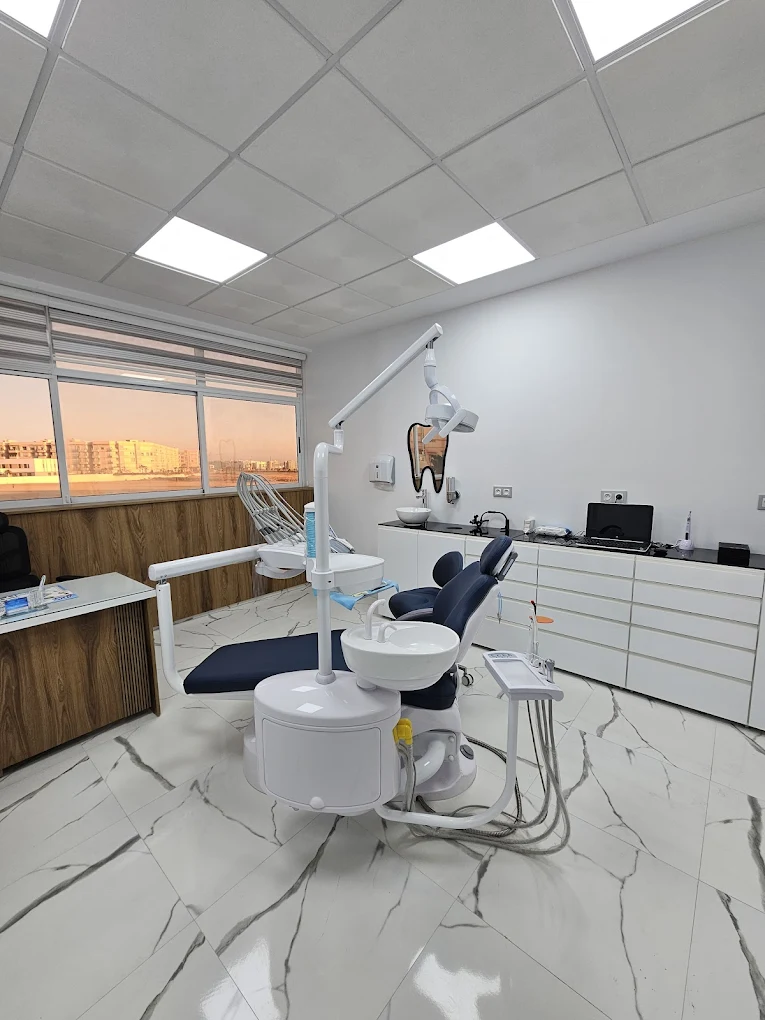
At Hikmat Dental Center in Agadir, the initial consultation assesses the nature and severity of the problem. A clinical examination, an X-ray and photographs confirm that the case is indeed suitable for aligners, which are not appropriate for every situation.
The consultation is also an opportunity to understand how the technique works: no bracket or wire, but a series of rigid and removable trays, each moving the teeth a little closer to the planned position. The patient remains free to remove them at mealtimes, which changes daily life compared with conventional appliances.
- Mild to moderate dental crowding
- Diastemas and gaps to be closed
- Mild to moderate open bite or overjet
- Relapse after previous orthodontic treatment
- Stronger aesthetic desire, especially in adults
Treatment plan
The treatment begins with digital impressions taken with an intraoral scanner, more comfortable than the traditional putty impressions. Software then simulates the movement of the teeth and previews the final result, validated with the patient before any manufacturing.
A series of progressive aligners is manufactured on this basis. Each tray is worn for about 22 hours a day and replaced every one to two weeks. Discrete attachments, bonded to certain teeth, guide the most complex movements.
Follow-up appointments take place at the practice every four to eight weeks; retention trays then ensure the stability of the result.
Benefits
The main advantage is discretion: the trays are almost invisible, which appeals to adults who want to straighten their teeth without affecting their professional or social life.
- Comfort: no metal wires or brackets that irritate the cheeks
- Hygiene: the trays are removed for brushing and flossing
- Predictability: the digital simulation makes it possible to anticipate the result
- Fewer emergency visits related to broken brackets or wires
Dr. Hikmat and his team in Agadir combine this approach with rigorous follow-up.
Because the trays are removed for brushing and flossing, oral hygiene is preserved throughout the treatment, unlike with fixed braces where plaque accumulates around the brackets. This reduces the risk of white spots and cavities, a major advantage in the long term.
Constraints
Success depends on discipline: wearing the trays for less than 22 hours a day lengthens the treatment and may compromise the result. The trays must be kept clean and replaced after every meal.
- Strict wear of about 22 hours a day, including during sleep
- Regular cleaning of the trays with lukewarm water, never hot water
- Enhanced oral hygiene to prevent cavities and gingivitis
- Limitations for certain complex cases: significant extractions or skeletal problems
Some movements, such as a significant rotation, remain difficult with aligners; a combined approach may then be preferable. An honest assessment at the practice avoids unpleasant surprises.
Duration of treatment
According to the World Health Organization, about 60% of children and adolescents have malocclusion, one of the most widespread oral health problems in the world. Among adults, the demand for teeth straightening is also increasing.
The duration most often ranges from 6 to 24 months depending on the complexity and the patient's cooperation. Mild cases are resolved within a few months; extensive corrections require more than a year. Regular wear and adherence to the change schedule are decisive.
In Agadir, an assessment at Hikmat Dental Center makes it possible to establish a realistic schedule, each plan being simulated digitally.
Metal braces or aligners: how to choose?
Metal braces remain the reference treatment for complex malocclusions and the youngest patients. They allow ample movements without depending on daily discipline.
Aligners are comparable for mild to moderate cases, with more comfort and discretion. The choice depends on the diagnosis and the patient's ability to commit to rigorous wear.
The WHO estimates that nearly 3.5 billion people worldwide are affected by oral diseases. A correct alignment facilitates hygiene and reduces plaque retention areas, supporting the prevention of cavities and periodontal disease.
Frequently asked questions about invisible orthodontics
Is invisible orthodontics painful?
Aligners exert progressive pressure on the teeth. A feeling of tension is common in the first few days after each tray change, but it remains mild and quickly disappears. Simple pain relievers are enough in case of temporary discomfort.
How long does an aligner treatment last?
The duration depends on the complexity of the case and most often ranges from 6 to 24 months. Wearing the trays 22 hours a day and following the change schedule are decisive. An assessment in Agadir makes it possible to estimate the duration for your situation.
Can you eat with the trays on?
No: the trays are removed for eating and drinking, except for water. They are worn for about 22 hours a day and are put back immediately after the meal. This habit limits breakage, discoloration and the accumulation of bacteria.
Is invisible orthodontics suitable for teenagers?
Yes, for mild to moderate malocclusions and provided there is good cooperation. The trays include wear indicators that make it possible to check compliance. An examination with the practitioner determines whether this approach is appropriate.