Effective daily hygiene
Rigorous oral hygiene is the first line of defense against tooth decay. The French Union for Oral Health (UFSBD) recommends brushing for 2 minutes, twice a day, with a fluoride toothpaste.
For an effective technique:
- Brush all surfaces of the teeth.
- Finish the evening routine with an interdental brush.
- Replace the toothbrush every 3 months.
Brushing should be gentle: a sweeping motion from gum to tooth, with a soft-bristled brush, limits gum recession and enamel wear. The interdental brush, used every evening, cleans the areas a toothbrush cannot reach — where plaque accumulates first and where cavities between teeth are born.
Do not neglect your tongue: it hosts bacteria that contribute to plaque formation. A tongue scraper or the back of the brush is enough to remove this biofilm every morning.
Electric toothbrushes can also help: their oscillating heads remove up to twice as much plaque as a manual brush when used correctly, and most models include a built-in timer to enforce the two-minute brushing time.
Fluoride intake
Fluoride strengthens tooth enamel and promotes remineralization. The French National Authority for Health (HAS) recommends an intake tailored to the individual's caries risk.
Standard fluoride toothpaste is usually sufficient; in case of high risk, fluoride varnishes applied at the dental office provide extra protection.
This professional application concentrates a high dose of fluoride directly on the enamel, and is particularly valuable for people with a history of cavities, dry mouth, or exposed tooth roots.
Fluoride intake is especially critical in children: from the eruption of the first tooth, it integrates into the developing enamel and makes it more resistant to acids. Children's toothpastes are dosed by age, from 500 ppm before age 3 to 1000 ppm up to age 6.
Diet and habits
According to the World Health Organization (WHO), nearly 3.5 billion people suffer from oral diseases, and caries of permanent teeth affects around 2 billion people.
What matters most is the frequency of sugary intake: limit sugars to mealtimes and avoid snacking.
The cariogenic power of a food depends on its stickiness and the time it stays in contact with the teeth. Sugary drinks consumed outside mealtimes, hard candies and sticky foods expose the enamel to repeated acid attacks that eventually demineralize it.
Water remains the reference beverage: often rich in fluoride depending on the region, it rinses away food debris and neutralizes the acidity of plaque after every meal.
Some habits also deserve attention: chewing sugar-free gum after meals stimulates saliva, which naturally buffers acids and helps remineralize the enamel between brushings.
Regular follow-up
An annual check-up is recommended, or even a six-monthly one in case of high risk, to detect early-stage lesions.
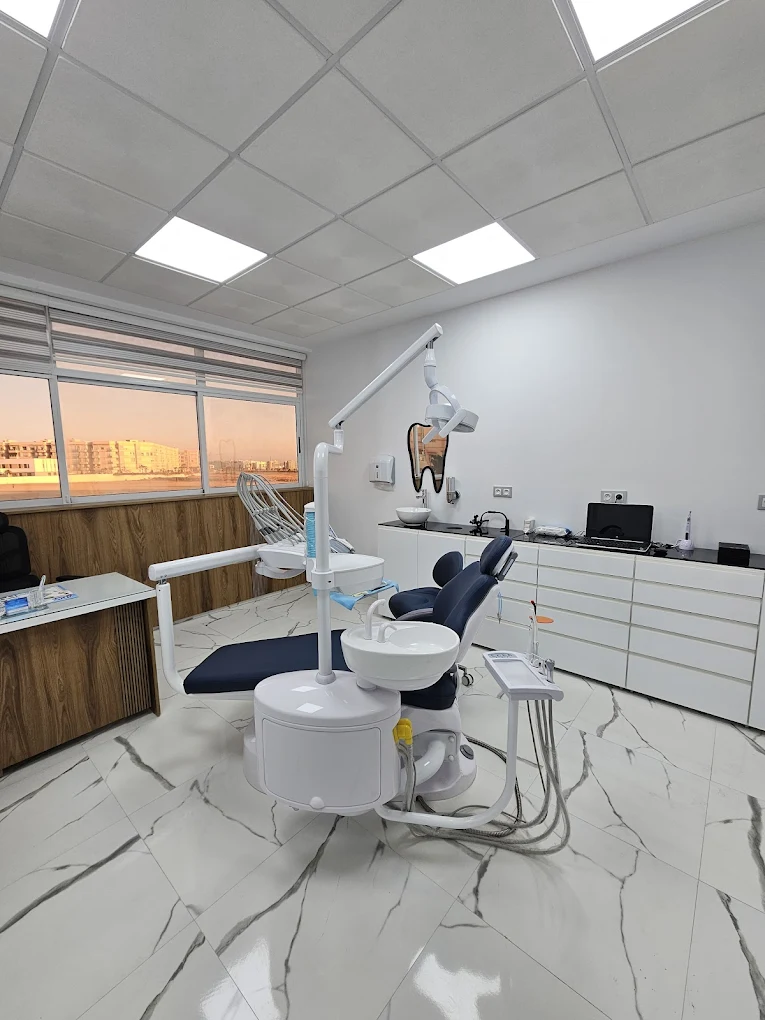
At Hikmat Dental Center in Agadir, Dr. Hikmat tailors prevention to each patient, and fissure sealants protect children's molars.
During the visit, the practitioner assesses each individual's caries risk based on hygiene, diet, saliva flow and history. This assessment leads to a personalized protocol — brushing, fluoride varnish, sealants or scaling — rather than a one-size-fits-all program.
One patient in two consults too late, whereas routine examinations remain the simplest way to avoid long and costly treatments.
Early detection also costs less: treating a small initial lesion is simpler, faster and more affordable than restoring a deeply decayed tooth or performing a root canal.
What is a cavity and how does it form?
A cavity is an infectious disease: bacteria convert sugars into acids that dissolve tooth enamel.
At the white spot stage, demineralization remains reversible thanks to fluoride; once a cavity has formed, dental treatment is necessary.
The process is silent: at first, the loss of minerals remains invisible to the naked eye, then a dull white spot appears on the enamel. This is the ideal window to reverse the process. Without intervention, the cavity deepens, reaches the dentin — causing sensitivity to cold and sugar — then the pulp, where the infection triggers sharp pain that requires root canal treatment.
Specific prevention for children and pregnant women
From the very first tooth, brushing starts with a fluoride toothpaste dosed according to age; the first dental visit is advised before the age of 1.
Pregnant women are at increased risk of cavities; a preventive consultation is useful. In Agadir, the practice supports young parents.
Pregnancy nausea exposes the enamel to stomach acids; it is advisable to rinse the mouth with water after vomiting and wait thirty minutes before brushing. In children, applying fissure sealants to permanent molars is the most effective weapon against cavities on chewing surfaces.
Frequently asked questions about cavity prevention
Is sugar the only cause of cavities?
No, tooth decay results from a combination of factors: bacteria, sugars, and oral hygiene. Sugar is not the only culprit.
Is fluoride dangerous?
At the doses recommended by the HAS, fluoride is completely safe. Only excessive intake can cause fluorosis.
At what age should a child first see the dentist?
From the appearance of the first tooth, ideally before the age of 1, then once a year.
Is dental scaling painful?
No, dental scaling is generally painless, although slight temporary sensitivity is possible.